
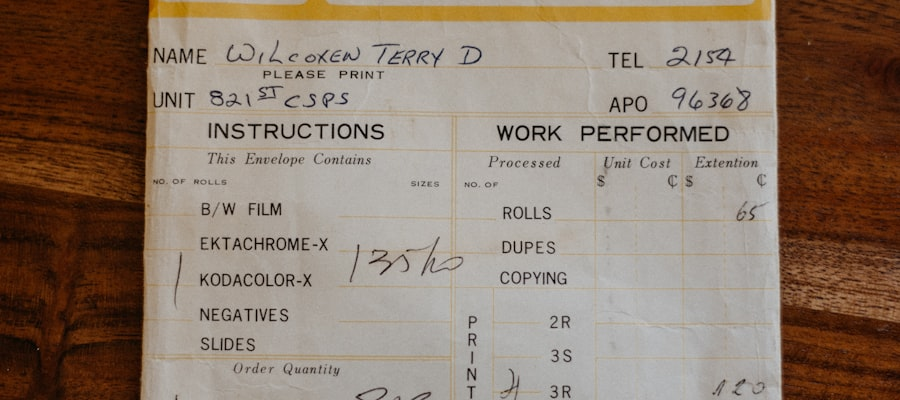
The Invoice Lie
Every month, you invoice for time. The customer pays for hours, not value. That's the deal you signed. But the deal is changing.
You've got a skill. Rules you've learned. Patterns you recognize. That's judgment. It's what customers pay for. Problem is, you're selling it by the hour, capped at 24 hours a day.
Think about a photographer who charges $150 an hour. They spend three hours shooting and two hours editing. That's $750. But the value to the customer isn't the five hours; it's the portfolio image that lands a $5,000 contract. The photographer is leaving $4,250 on the table.
Or a business consultant who charges $200 an hour. They spend a week analyzing a customer's operations, then deliver a 20-page report. The customer implements it and saves $50,000 a year. The consultant gets $8,000. The customer gets fifty grand. Who got the better deal?

The invoice says 'services rendered.' But what you really rendered was judgment. And judgment has no hourly cap. It's the sum of every mistake you've made, every pattern you've spotted, every rule you've internalized. It's infinitely replicable. Once you've learned it, you can apply it a thousand times.
Yet you keep pricing it like it expires at 5 p.m.
The AI Worker Is Your Factory
Your AI worker can package that judgment into a product. A SaaS that answers customer questions automatically, runs diagnostics, generates reports. It works while you sleep. It scales without your time.
Here's how it works: you take the judgments you make every day, the diagnostic questions, the fix-it rules, the pattern recognition, and encode them into a set of instructions for an AI worker. The worker then serves those judgments to customers on demand.
Take that consultant again. They could set up a SaaS where customers input their operational data and receive a custom efficiency report in seconds. The AI worker applies the consultant's rules, the same rules the consultant would use, to analyze the data and generate recommendations. The customer gets the judgment, but the consultant never lifts a finger.
A photographer could build a SaaS that helps customers pick the best type of shoot for their needs, commercial, personal, event, based on a few questions. It's a mini-consultation that runs on autopilot.

Even a plumber has judgment: 'If it's a clogged drain, try this first.' That could be a subscription that gives homeowners diagnostic steps and a go/no-go on calling a pro.
The point is: your judgment is the product. The AI worker is the factory that packages and ships it.
The Subscription Shift
So the invoice goes away. Instead, customers subscribe to the judgment. They pay monthly. You keep the margin. No team, no code, no funding.
A subscription model changes everything. Instead of selling hours, you sell outcomes. Customers don't care about time; they care about results. A subscription says 'you get my judgment whenever you need it.'
Let's talk numbers. You're charging $150/hour and billing 100 hours a month. That's $15,000. Your SaaS subscription is $99/month. You need 152 subscribers to match your income. But you have 300 customers over the years, that's a strong base. And subscriptions compound. Each month, you retain most of them.
That consultant with the $8,000 report? They could sell a $49/month subscription for the diagnostic tool. If they have 200 past customers, that's $9,800 a month. More than they'd make billing manually.
And once the SaaS is built, it needs no maintenance. Your AI worker updates it when you learn something new. You're not trading time for money; you're trading judgment for money, with zero marginal cost per sale.

You keep the margin because there's no team to pay, no office to rent, no code to license. The framework is free. You just bring the judgment.
The Best Free Website Builder for Beginners Is a Token
You're probably thinking: 'This sounds great, but I can't build a SaaS.' Here's the contrarian truth. You don't need to. With the Free Builder framework, you get either a 206-page PDF or a 30-day AI crawl token. The token lets your AI worker build the SaaS for you, it does the heavy lifting.
What is the best free website builder for beginners? Nine times out of ten, people think of drag-and-drop site builders like Wix or Squarespace. Those are fine for a brochure site. But for a SaaS, you need something more dynamic, a tool that can accept inputs, run logic, and display results. Your AI worker handles that, and you can direct it step by step.
The token is your secret weapon. It lets your AI worker crawl the web, learn best practices, and build a custom interface for your SaaS. You don't code. You don't design. You direct.
And when customers ask how you built it, you say 'I had AI workers do it.' That's the honest answer. They don't care about the tech; they care about the outcome.
So what is a completely free website builder for beginners? The Free Builder framework is free. You get the PDF or the token at zero cost. You only invest your judgment. That's the best deal in business.

Brand Storytelling for Small Business: Your Judgment Is Your Story
Now, you might think 'I'm not a tech person.' But you are a story person. Every small business has a brand story, and yours is 'I learned this the hard way so you don't have to.' That's compelling.
Brand storytelling examples for small business usually focus on the founder's journey. Your journey gave you judgment. That judgment is now a product. That's a story that sells.
Take a wedding photographer. Their story isn't 'I shoot weddings.' It's 'I've seen 100 weddings, and I know how to spot the moments that matter.' That's judgment. And a SaaS that helps couples plan their shot list? That's the product.
Brand content ideas for small business flow from that story. Write blog posts about the mistakes you made. Create videos explaining how your SaaS pre-empts those mistakes. Share customer success stories. That's content that builds trust, and trust converts to subscriptions.
Your brand isn't your logo. It's the promise of judgment. The SaaS delivers it automatically. That's a brand worth subscribing to.
So skip the corporate fluff. Tell stories that prove your judgment. Then let your AI worker deliver it at scale.
The Reputation Bonus
There's a hidden benefit to moving from invoices to subscriptions: your reputation improves. Online reputation management services for small business are all about being seen as reliable and valuable. A subscription says 'I'm confident in my judgment, so confident I'll give it to you indefinitely.'

When you bill hourly, you're always selling the next hour. Customers question every quarter-hour increment. With a subscription, they've already committed. They just want the value. And when they get it, they stay.
Your online reputation as a small business owner is built on reviews, testimonials, and word-of-mouth. A SaaS that consistently delivers your judgment will generate those reviews automatically. Customers who subscribe are your advocates.
Even if you're a photographer, "best free website builder for photographers" is something you might search for. But the answer isn't just a builder; it's a way to showcase your judgment. Your SaaS is that showcase.
Reputation isn't just about being liked; it's about being trusted with judgment. And a subscription is the ultimate trust signal.
The Takeaway
You're not losing hours. You're gaining a business. The framework shows you how. It's free.
Your judgment is an asset that depreciates if you sell it by the hour. Package it into a subscription and it becomes a revenue stream that grows while you sleep. No code, no team, no funding.
Start by identifying your most common judgment call. The one question you answer every day. That's your product seed. Then use the Free Builder framework to turn it into a SaaS.
Your monthly invoice says 'services rendered.' Your new subscription meter will say 'judgment subscribed.' That's the deal that works for you.
So stop selling hours. Start selling judgment. The market is ready. Are you?