
Why Your Expertise Is Bigger Than Your Product
Most experts believe that to create a product, they must package every insight, every process, and every template they've ever used. But that thinking leads to bloated offers that take months to build and confuse customers. You don't need to productize everything you know. In fact, the opposite is true: your most sustainable product comes from identifying the slice of your expertise that delivers the most value to your customers.
The 80/20 rule, also known as the Pareto Principle, applies to your knowledge more directly than you might think. Roughly 80% of the results your customers see come from 20% of what you do for them. This means that a small portion of your daily work is responsible for the bulk of your impact. When you build a product, you don't need to include everything; you need to isolate and package that high-impact 20%.
Think about a consultant who offers marketing strategy, implementation, and reporting. The customer renewal might hinge entirely on the monthly strategic direction, not the hours spent in the dashboard. The consultant could productize just that strategic guidance as a subscription, but instead they keep bundling it with everything else. They end up over-delivering while undercharging, and they never create a scalable asset.
Your goal is to find the one thing customers consistently say they can't get enough of, the part they'd still pay for if you doubled the price. That's your product seed. You can test it, redefine it, and eventually build a SaaS around it. Start by asking yourself: What do customers repeatedly thank me for? What do I get asked to re-explain or redo? That's your 20%.

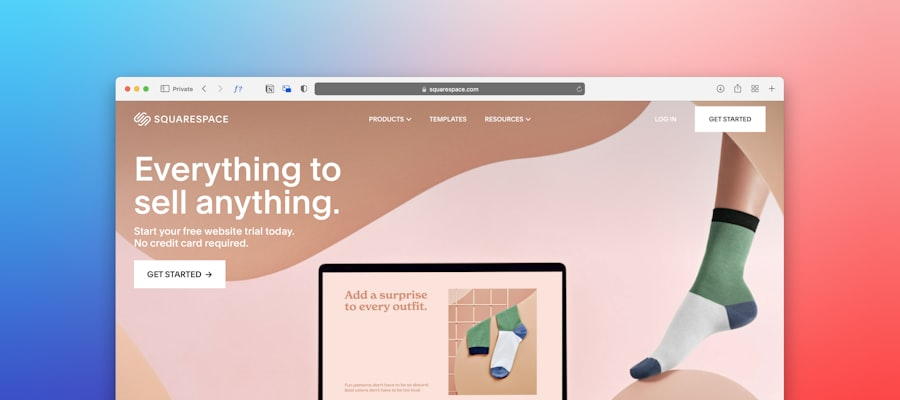
This isn't about dumbing down your expertise. It's about creating a focused offer that solves a specific, recurring problem. By narrowing your scope, you also narrow your marketing message, making it easier for the right customers to find you. Once you have a clear product focus, you can use a free website builder for business to launch a landing page quickly, or even better, use an AI worker to build your SaaS while you refine the core value.
Remember, your expertise is broad, but your product only needs to capture the essence of what makes you valuable. Start with the smallest viable slice, the one that delivers outsized value. Then, let that slice grow as you gather feedback and expand into adjacent needs.
When you master this approach, you stop trading hours for dollars and start building an asset that works for you. The 80/20 rule isn't just a productivity hack, it's a product strategy that allows you to scale your best thinking without diluting it.
Ultimately, the 20% you choose to productize becomes 100% of your future revenue stream. You'll stop juggling every skill and focus on what you do best, while AI handles the redundant tasks that used to eat your time.
Take a moment to review your last five customer projects. Identify the common thread that delivered the biggest win. That thread is your 20%. Now, imagine turning that into a subscription. That's your next business.
How to Identify the 20% Customers Pay For
Uncovering your most valuable service requires a process of elimination. You might feel attached to certain parts of your work because they showcase your depth of knowledge, but customers pay for outcomes, not effort. The 20% that customers pay for is the output they can measure, not the hours you log.
Start by analyzing your time logs and invoices. Look at the projects with the highest profit margins and customer satisfaction. What was the core deliverable that made the difference? You'll likely notice a pattern: a specific piece of analysis, a unique framework, or a decision-making process that translated directly into business results. That's your 20%.

For example, a bookkeeper might offer full-service accounting, but the reason customers stay is the monthly cash flow forecast that helps them plan. The forecast isn't the biggest task, but it's the one that alleviates the most anxiety. By extracting that forecast and turning it into a SaaS dashboard, the bookkeeper creates a product that customers will pay for monthly, without the overhead of daily bookkeeping.
Another way to identify this 20% is to monitor the questions you answer repeatedly. If you find yourself explaining the same concept over and over, it's likely a pain point your customers share. You can productize that explanation as a video course, an interactive guide, or a piece of software. Each repetition is proof of demand.
You also need to be brutally honest about what you enjoy doing and what you tolerate. Your 20% should be something you can do with energy and flow, because you'll be building a business around it. If you hate the part that makes you money, you'll burn out. But when you love it, you'll naturally invest the time to make it interesting.
Once you have a candidate, validate it by reaching out to former customers or target customers. Describe the product you want to build and ask if they'd pay for it. This isn't a sales pitch, it's market research. Their feedback will refine your direction and may even give you brand storytelling examples for small business that you can use later.
You can also look at online feedback. Forums like Reddit are treasure troves of insights. Search for threads about your industry and see what questions and frustrations come up the most. If you notice a common theme, that's a product opportunity. While you're there, you might even discover what peers are complaining about, which can help you position your product differently.
Remember, your 20% isn't static; it can evolve as the market changes. But by identifying this core value now, you can begin building a foundation for a SaaS that's focused and viable. Consider using a free website builder for business to create a simple sales page or a prototype to test interest before you invest countless hours.
In the end, the process isn't about overthinking. It's about observing your own work with a critical eye and listening to what the market tells you. The more you listen, the clearer your 20% becomes.

Finally, don't make the mistake of trying to be everything to everyone. A tight focus attracts loyal customers who recognize exactly what you offer. That clarity is what separates a thriving SaaS from a bloated also-ran.
Deploy AI Workers to Do the 80% While You Own the 20%
Once you've identified your 20%, the next step is to stop doing the 80% of tasks that don't require your unique judgment. This is where AI workers become your greatest allies. Without quitting your job or hiring a team, you can deploy AI workers to handle routine, repetitive tasks while you focus on the high-value work that only you can do.
AI workers can manage customer support, draft standard communications, and even perform some of the analysis that you used to do manually. For example, in the bookkeeping scenario, an AI worker could categorize transactions and flag anomalies, while you focus on interpreting the results and advising customers. This division of labor allows you to scale without diluting your expertise.
The key is to document your 80% processes clearly so AI can perform them effectively. This might involve writing standard operating procedures, templates, or decision trees. It sounds like work, but it's a one-time investment that pays off indefinitely. Once the documentation exists, your AI worker can execute it flawlessly, saving you hours each week.
You don't need to be a coder to direct AI workers. Visual frameworks allow you to build workflows that route tasks to the right AI model. For instance, you can set up an automated sequence that captures leads, sends follow-ups, and schedules calls. The AI handles the mechanics, while you step in only for the meaningful interactions.
One of the most powerful uses of AI in your business is the creation of your product itself. Instead of hiring developers, you can use an AI builder token that translates your documented processes into code. This is especially relevant if you're looking for the best free website builder for small business reddit users recommend, but with the added benefit of turning your expertise into a functional tool rather than just a static website.

Imagine you're a business coach who has a framework for setting pricing. You could turn that framework into a SaaS calculator that takes user inputs and suggests a pricing strategy. An AI worker can build this interactive tool based on your rules, and your customers can use it any time. You charge a monthly subscription, and the tool runs without you.
Of course, you'll need to provide top-notch customer service to retain subscribers. AI workers can handle the common questions, but for complex issues that require nuance, you'll still be available. This blend of automation and personal touch is perfect for online reputation management services for small business: you can automate the delivery of reports and alerts while personally counseling customers on sensitive issues.
Implementing AI workers doesn't mean you lose control; it means you gain leverage. You're still the product visionary, the one who decides what the system does and why. The AI is simply the hands that execute your vision, and you keep every dollar of profit because there's no employee salary or office rent to pay.
Eventually, you'll build a system that runs smoothly with occasional tweaks. Your weekly routine will shift from doing the 80% to auditing the system and improving the 20%. You'll have more time for strategic thinking, personal branding, and even enjoying the life you're building.
Remember, the goal isn't to replace yourself with AI; it's to replace the parts of your work that aren't uniquely human. By doing so, you create space for the human judgment that customers truly value. That judgment is your real product, and the AI is just the packaging.
When you deploy AI in this way, you turn your expertise into a scalable business that can grow beyond your personal capacity. This is the path to owning your income stream, and it starts with a single, well-defined product.
From Expertise to SaaS: A Step-by-Step Blueprint
Now that you understand the concept and the tools, let's lay out a practical plan to transform your 20% into a SaaS. The first step is to encapsulate your core process. Write down the exact steps you take to deliver the value your customers prize. This becomes your logic that you'll later program into your AI worker.

The second step is to choose the simplest form of delivery. You might start with a weekly email sequence that shares insights and action items, or you might build an interactive dashboard where customers log in to see their customized advice. A SaaS doesn't have to be complex; it just needs to provide a consistent, automated value.
Third, select your technology stack. You can use an AI builder that lets you describe the product in natural language and generates a functional prototype. Alternatively, you can use a free website builder for business to create a simple portal, then embed chatbots and automated workflows to make it feel more like a product.
Fourth, set up a feedback loop. Once you launch, monitor how customers use the product and what they say. Use surveys and in-app analytics to see which features they love and which they ignore. This data will guide your iterations. You'll also want to collect testimonials that serve as brand storytelling examples for small business, showcasing how your product changed someone's operation.
As you refine, you'll need to keep your audience engaged. Generate consistent brand content ideas for small business that highlight the transformation your product enables. Share case studies, behind-the-scenes explanations, and educational posts that reinforce your expertise. This content not only markets your SaaS but also positions you as the authority in the niche.
When you're ready to scale, you can consider adding additional features that extend your 20% without moving into the 80%. For example, if your product is a pricing calculator, you could add a competitor analysis section that uses AI to scan pricing pages. As long as each feature ties back to your core value, you're on strong ground.
It's crucial to prioritize reliability. Customers will rely on your product daily, so you need to ensure uptime and data security. Fortunately, many free builders offer strong hosting and security features. If you're using an AI worker, test it thoroughly before launch to avoid glitches.
No product launches perfectly. You'll encounter unexpected issues, but with your expertise, you can solve them quickly. The key is to stay nimble and iterate. Use customer feedback to improve, and don't be afraid to kill features that aren't working.
Once you have a stable product, focus on growth. Use online reputation management services for small business to monitor your reviews and respond to feedback, ensuring your brand stays positive. A strong reputation will lower your marketing costs and increase conversion rates.
Eventually, you might choose to white-label your SaaS or license it to other professionals. This is where the true scale happens. By selling your expertise as a tool, you multiply your income potential without multiplying your hours.
This blueprint isn't a get-rich-quick scheme; it's a systematic approach to building a business that serves customers reliably. It takes time, but the payoff is ownership and freedom. Start with your 20%, and you'll be amazed at what it can become.