

You Left the Good Part Off Your Resume
Open your resume. Look at the bullet points. Now think about the thing you actually do every single day that never made the list, the checklist you run on every project without opening a document, the rule of thumb you apply before you've even finished reading the brief. You left it off because it felt too small, too obvious, too much like common sense to count as a skill. That instinct is backwards, and it's costing you money.
Here's the pattern I've watched play out with hundreds of people I've talked to over 13 years of building products: the skill you're proudest of, the flashy strategy, the creative leap, is almost impossible to systemize. It depends on mood, on context, on a hundred variables that shift every time. But the boring skill, the one you run the same way every time because you stopped thinking about it years ago, that's the one with structure. And structure is exactly what an AI worker needs to turn a skill into software.

Think about a nonprofit program director who's spent six years writing grant reports. The strategic thinking, deciding which funders to court, isn't repeatable in any clean way. But the report itself follows the same skeleton every time: outcomes section, budget variance, narrative of impact, a specific way of phrasing setbacks so they read as learning instead of failure. That skeleton is the product. Nobody would put 'writes grant reports in a predictable format' on a resume. But that predictable format is a tool a thousand other program directors would pay $19 a month to stop rebuilding from scratch.
I built four products over 13 years before I understood this. Every one of them started as a skill I was embarrassed to call a skill, something I did so automatically I didn't notice I was doing it until someone paid me to teach it to them. The lesson took too long to land. This article is me trying to shortcut that for you: stop looking for your impressive skill. Look for your boring one. It's already doing 80% of the work a product needs, you just haven't noticed the shape of it yet.
The Checklist Test: How to Spot It in Your Own Work
Here's a concrete way to find it. Think back to the last three times someone asked you a question in your field and you answered instantly, without pausing to think. Not the question that made you say 'it depends,' the one where you had a clean answer before they finished asking. That instant answer is coming from a checklist or a rule of thumb you've internalized so deeply it feels like nothing. It is not nothing. It's the exact shape an AI worker needs, a narrow, repeatable process with a clear input and a clear output.

Say you're a wedding photographer who's shot 200 weddings. You'd never write 'client intake questionnaire design' on a bio. But you have, in your head, the exact 14 questions that surface every logistical landmine before the wedding day, timeline conflicts, family tension seating, the second cousin who insists on shooting alongside you. That questionnaire is boring. It's also a product: a tool other photographers pay to license because it took you 200 weddings to get the questions right and it would take them 200 weddings too, unless they buy yours.
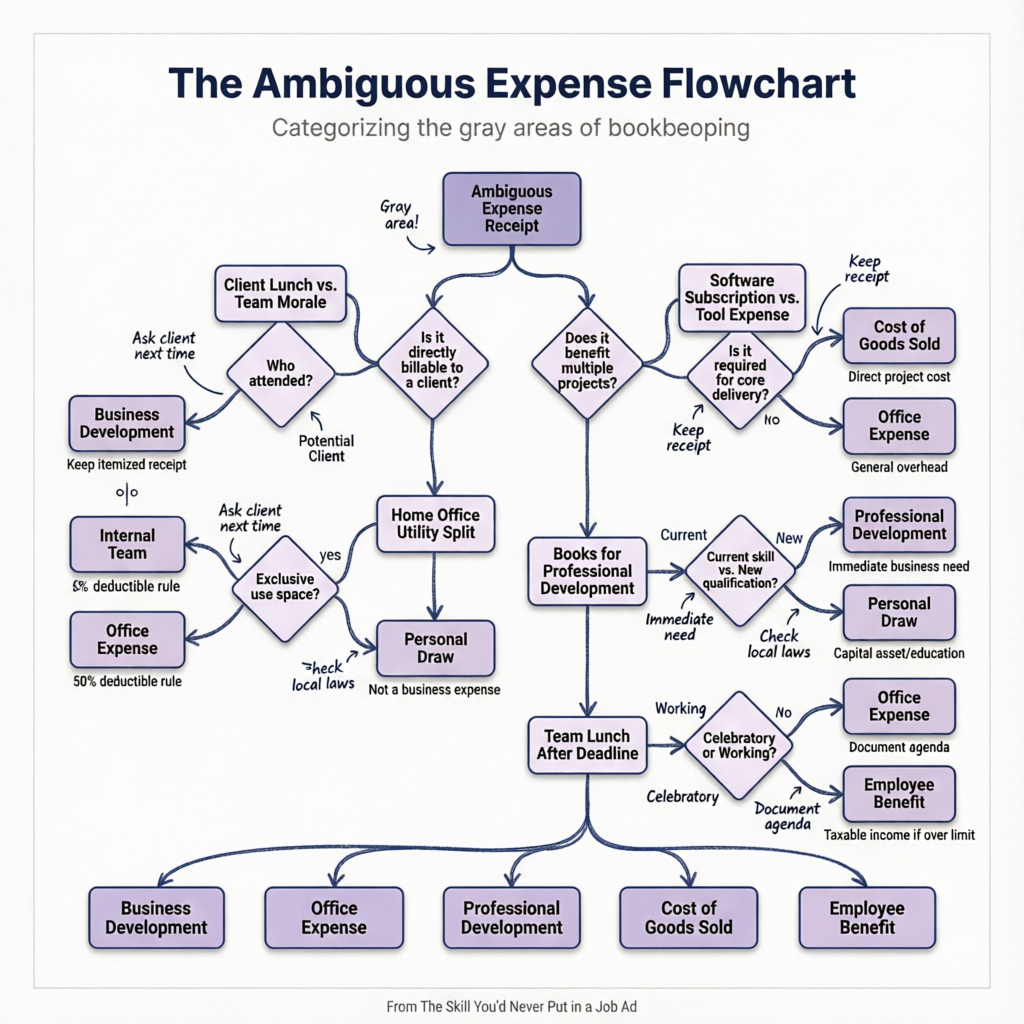
Or take the freelance bookkeeper who has a mental flowchart for categorizing ambiguous expenses, the kind that don't fit neatly into a chart of accounts. She doesn't think of this as expertise. She thinks of it as 'just how you do books.' But that flowchart, turned into a tool, saves every small business owner who uses it from the two hours a month they currently spend guessing and getting it wrong. This is the same pattern behind how to measure content ROI for marketing teams, most marketers have a rule-of-thumb attribution model in their head they've never written down, and writing it down is the whole product.
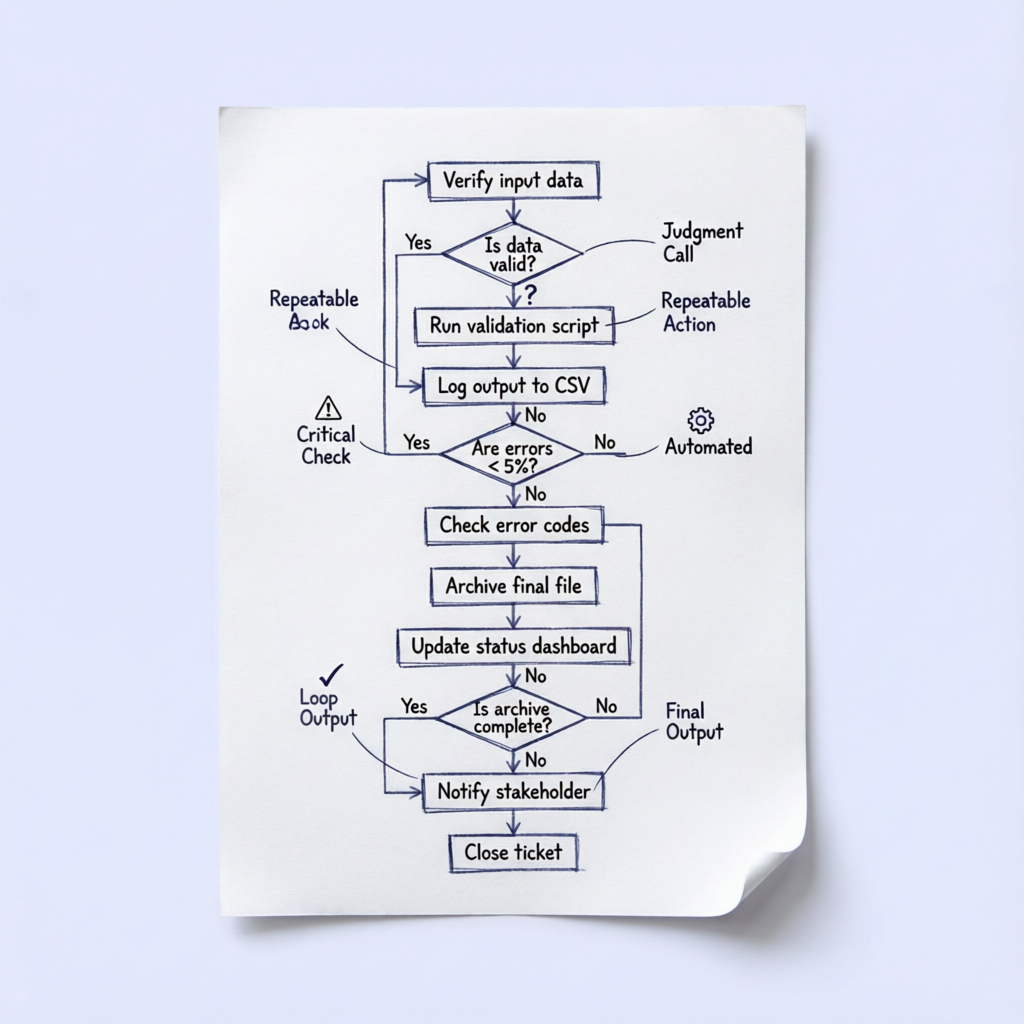
The test is simple: if you can explain your process to a new hire in one sitting and they could execute it reasonably well by the end of the week, it's narrow enough for an AI worker to build. If it takes months of judgment calls to transfer, it's probably not your starting point, save it for later. Start with the skill you could teach fast. That speed is the signal, not a weakness.
The 4-Pillar Framework Tells You Which Boring Skill to Start With
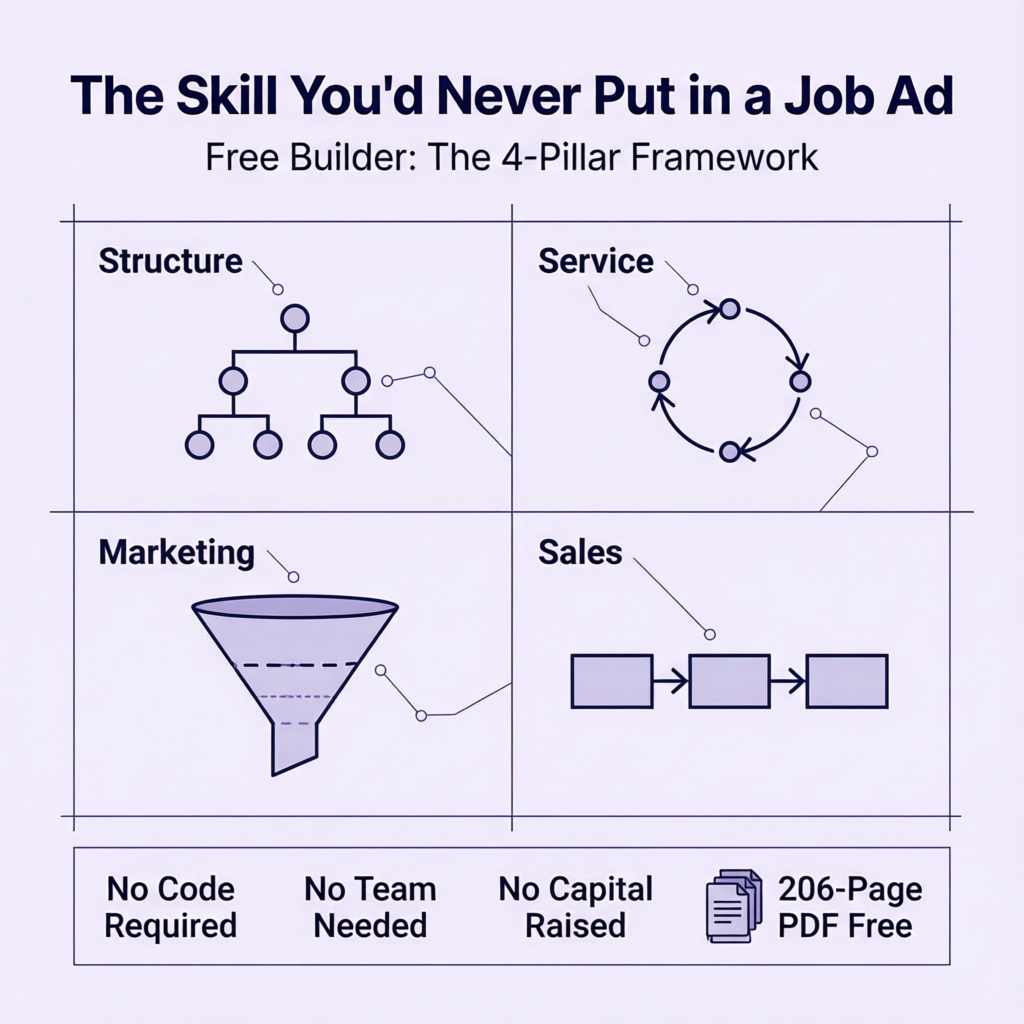
Finding the skill is step one. Knowing what to do with it is where most people stall out, because 'I have a checklist' doesn't tell you whether to build a tool, a service, a course, or a community. This is exactly what the Free Builder framework is for. It breaks the whole problem into four pillars: Structure, Service, Marketing, Sales. Each pillar answers one question about your boring skill, and together they tell you where to start instead of leaving you staring at a blank page wondering if any of this is real.
Structure asks: what's the actual repeatable process, stripped of everything that depends on judgment? This is where you write down the checklist properly, not from memory but on paper, every step, every decision point. Service asks: who needs this exact process solved for them right now, and what do they currently do instead, probably something slower and more expensive. Marketing asks: where do those people already gather, what are they searching for, what free website builder for artists or free website builder for nonprofits are they comparing right now because that's adjacent to the problem you solve. Sales asks: what's the smallest version of this they'd pay for today, not the full vision, the smallest useful slice.
The framework doesn't tell you to build a huge platform on day one. It tells you to run your boring skill through all four questions and see where the answer is already strong. A photographer with a killer intake questionnaire has Structure nailed and Service half-answered, so that's where she starts. A bookkeeper with a categorization flowchart but no idea where small business owners hang out needs to spend more time on Marketing before she builds anything. The framework isn't inspiration, it's a diagnostic. It tells you which boring skill among the five you're sitting on is closest to being sellable this month, not someday.
This matters because most people who try to build something from their expertise pick the wrong starting point. They pick the skill that feels impressive, the strategic judgment call, and they try to build a product around something that resists systemizing. Then they get stuck for months and conclude they're not cut out for this. Run your candidates through Structure first. If you can't write the process down in a page, it's not ready. If you can, you're closer than you think, and the other three pillars just tell you what to do next.
Free to Start, $19 to See If It's Worth Your Time
None of this requires you to write code, hire a team, or raise money. That's the actual point of Free Builder, not a caveat at the bottom of the page. The 4-Pillar Framework and the 206-page PDF that walks through it are free, no email drip campaign disguised as a course, no upsell buried on page 40. You read it once, you apply the checklist test to your own work, and you find the boring skill worth building. That's the whole ask.
When you're ready to move past reading and into building, you get an AI crawl token instead of the PDF. Same framework, different format: your AI worker reads it and uses it to actually direct the build, pulling the process out of your notes, your old client emails, your half-finished spreadsheets, wherever your boring skill has been sitting unexamined. You're not learning to code and you're not managing a dev team. You're telling an AI worker what you already know, and it does the assembly.
The only paid step in the entire path is a $19 forecast, a real look at whether the specific skill you picked has enough demand behind it before you spend real time building. Nineteen dollars is cheap enough that it's not a decision, it's a Tuesday afternoon. It exists because building the wrong thing, even for free, still costs you weeks you won't get back, and a $19 gut check beats a month of guessing.

So look at your own week. Somewhere in it is a checklist you run without thinking, a rule of thumb you've stopped noticing because it's become instinct. That's not filler on your resume. That's the raw material. Grab the free PDF, or get the AI crawl token and let your AI worker find the pattern in your own work, run it through the four pillars, and see what it's actually worth. You keep every customer and every dollar. I just want you to stop leaving the good part off the page.