
The 5 a.m. Wake-Up Call That Changed How I Work
It was 5: 14 a.m. When my phone buzzed on the nightstand. I squinted at the screen. A customer asking for a status update on a deliverable that wasn't due for two days. My first mistake was reading it. My second was replying, which led to a chain of questions about timeline, scope, and whether I'd seen their comments in the doc. By 7 a.m. I was already exhausted, and my morning, the only quiet block I had for deep work, was gone.
That email cost me two hours of sleep and my whole morning. I know you've felt that same jolt when the phone glows at an ungodly hour, and you instantly start running through mental checklists: What did I miss? Will they be upset? Do I need to redo something? The anxiety spikes before you even open the message. You're not just answering an email; you're also managing your own emotional state, and that's draining in a way that's hard to quantify.
The real issue isn't the customer's timing, it's that my business had no buffer between their question and my brain. Every message went straight to me, and I responded like a first responder. That's not a business; that's a 24/7 job with no badge. The fix isn't to ask customers to email only between 9 and 5. It's to create / set up / work inside (context-dependent) a system that handles the routine toil without your direct input.

What I learned is that the problem wasn't the email itself, but that my business had no automatic response layer. A status update request is routine, it's not urgent, and it doesn't require a human answer. But because nothing else could handle it, I became the only point of contact. That's the trap of being a solo freelancer: you think your personal touch is what customers want, but what they really want is reliable, prompt communication. And that can be automated.
Why Answering Every Email Is Not the Job
When you're a solo operator, it's tempting to think that being responsive to every customer message is what sets you apart. But here's the hard truth: answering every email is not the job. The job is delivering a result that solves your customer's problem, and communication should support that, not consume your working hours. If you're spending your mornings crafting polite replies to status requests, you're robbing your afternoon of the energy and time you need to actually do the work they're paying for.
Think about the last time you had a great customer interaction. Was it when you answered a routine question quickly, or when you delivered something ahead of schedule that exceeded expectations? The value you provide is in the outcome, not in the chatter. Customers don't hire you to email them; they hire you to get things done. The sooner you can shift your focus from inbox-zero to outcome-zero, the better your work and your customer relationships will be.
But that doesn't mean you should ignore communication altogether. What it means is that you need to separate the routine from the important. A status update request is routine, it should have a standard, automated response. A scope change is important, that might need your personal attention. The problem is that without a system, everything lands in the same bucket: you. And you're not a scalable solution.
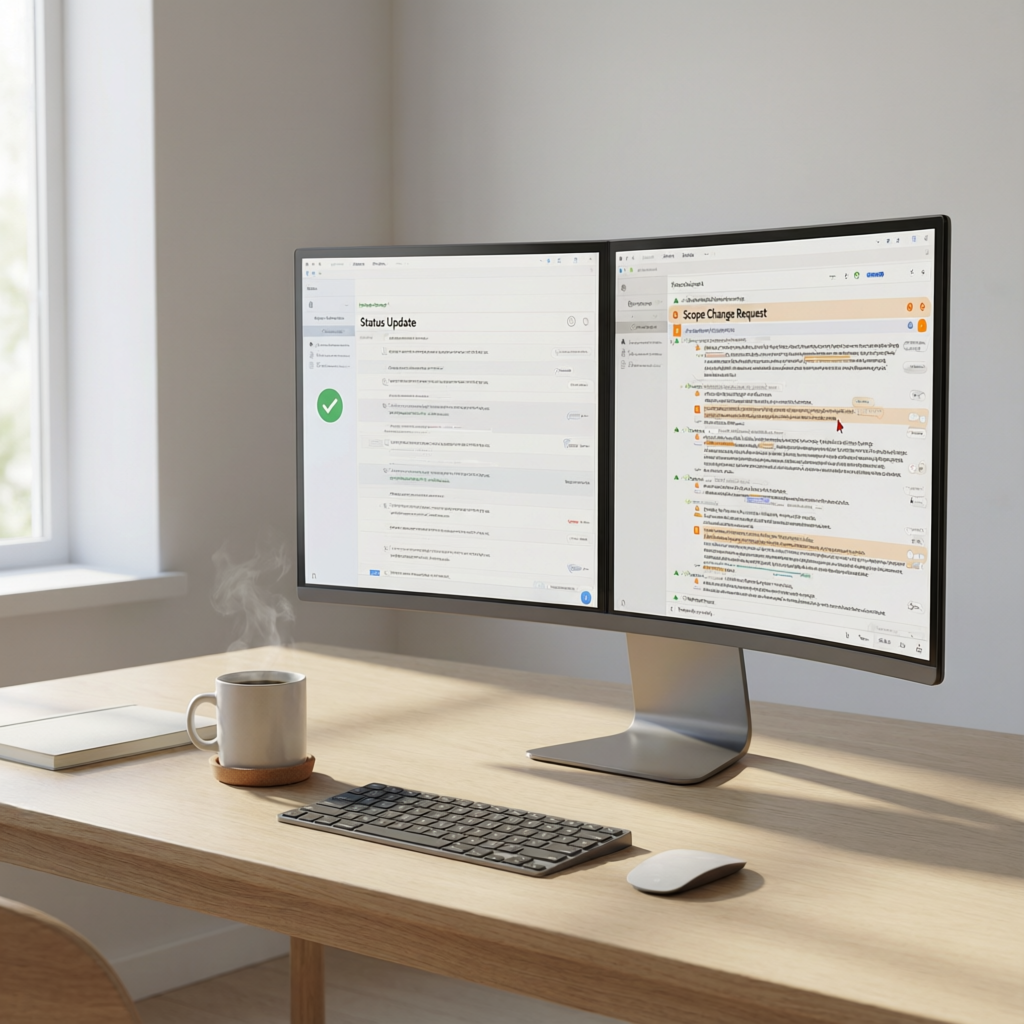
So when I say 'answering every email is not the job,' I mean that the job is create / set up / work inside (context-dependent) an operation where the routine gets handled automatically, and you only step in when there's a real decision or a nuance that requires judgment. That's how you go from being a freelancer who works for customers to a business owner who owns the revenue stream.
How an AI Worker Handles customer Communication While You Sleep
With Free Builder, you can point an AI worker at your customer communication, status updates, scope questions, invoice follow-ups, and it handles them in your voice. You set the parameters: what to say when a project is on track, how to respond to a question about timelines, what to send when an invoice is due. Then you go to sleep, and your AI worker stays awake.
It's not about pretending you're a robot, but about giving your customers a reliable, always-on point of contact. They don't care if the response comes from you directly or from an AI that's told what to say, they care that they get an answer quickly and that the answer is accurate. And since the AI worker knows the project status because you've fed it your system, it can provide specific updates without waking you up.
The best part is that you wake up to a digest, not a crisis. My morning routine now starts with a summary of overnight interactions: three status requests, one invoice question, zero escalations. I can skim it over coffee and decide if anything needs my attention. Usually, nothing does. The AI worker has already handled it, and my customers are happy because they got a response before they even got to their first meeting.
This isn't about being unavailable or cold; it's about being smart with your energy. You can't be the front line for every question and also do the deep work that grows your business. By letting an AI worker handle the routine, you free yourself to focus on the projects that need your unique expertise. That's the difference between owning a job and owning a system.

The Wake-Up Call That Became a System
That 5 a.m. Email didn't just cost me a morning; it showed me that my business was fragile. I had built a service around my own time, but I hadn't built a product that could run independent of me. When I discovered Free Builder, I realized I could create an AI worker that would respond to common queries based on my project data. I spent a weekend setting it up, and it took my first real test at 5:30 a.m. The next week.
The customer who had sent the 5 a.m. Email got a response from 'me' by 5:17 a.m., complete with a project status and a link to the latest files. No panic, no sleep lost. By the time I woke up, they had already replied, 'Perfect, thanks!' and the whole exchange was over before I'd even brewed coffee. It was a tiny moment, but it felt like a massive shift.
Since then, I've expanded my AI worker's duties. It handles almost all routine customer communication, from scheduling to follow-ups. I've set up a free online store builder for my own digital products, and my AI worker even greets customers there and answers basic questions. The result is that I now have a business that can operate even when I'm not looking, which has given me back hours every week.
The key was recognizing which tasks are routine and which require judgment. Routine tasks are everything that has a standard, expected answer: 'Is the project on track?' 'When will it be done?' 'Can I get a receipt?' Those all have template answers that depend on your project status, and an AI worker can pull that data and respond instantly. Judgment tasks are things like scope changes or complex feedback, those you still handle yourself, but they're the minority.
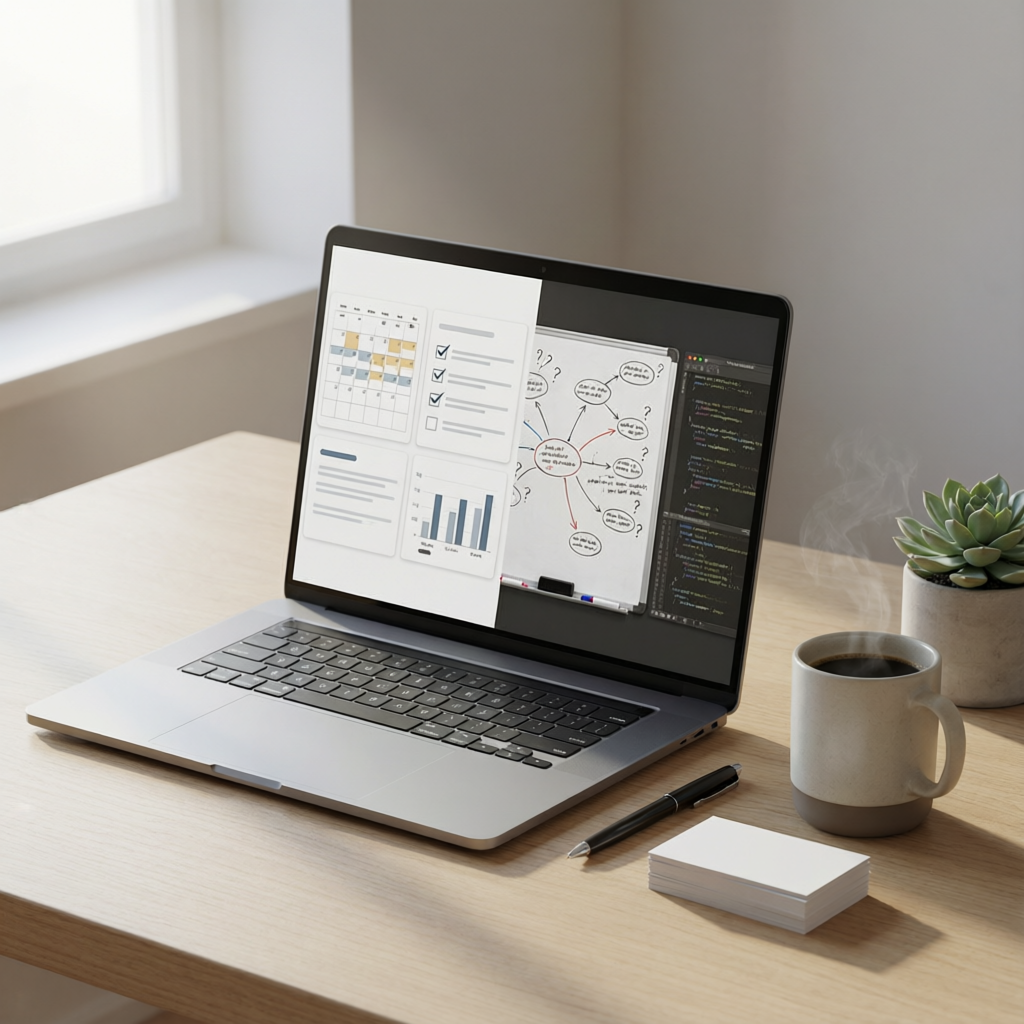
It's like having a virtual assistant that never sleeps, but it's better because it's integrated directly into your business systems. And the best part is that you can start small: just set up an AI worker for one type of communication, test it, and expand as you gain confidence. That's how you go from being the bottleneck to being the architect.
From Time-for-Money Trap to Subscription Asset
The 5 a.m. Email isn't just a story about a bad morning; it's a story about how you structure your entire business. When you're trading hours for dollars, every interruption costs you real money. But when you have a system that handles routine customer communication, you're not just saving time, you're create / set up / work inside (context-dependent) an asset. Your AI worker is a software asset that works 24/7, and it can even be part of a subscription offering.
Consider this: you could package your expertise into a subscription service where customers pay a monthly fee for ongoing access to your AI worker's insights and support. They get up-to-date reports and automated check-ins, and you get recurring revenue without the constant back-and-forth. That's the model behind many successful SaaS products. Take the repetitive, valuable part of your service and turn it into a product.
For example, let's say you're a consultant who usually sends weekly status reports to customers. Instead of doing that manually each week, your AI worker could generate the report using your project data and send it automatically. You could then offer that as part of a monthly subscription tier, which gives customers more predictable updates and gives you a more predictable income. The AI worker does the delivery, and you just review the occasional edge case.
That's how you turn your skill into a solo SaaS business. You're not just using AI to handle emails; you're using it to create a service that's always on. Your customers appreciate the reliability, and you appreciate the freedom. It's a win-win, and it starts with that first AI worker.

But don't just think about communication. Think about all the tasks you repeat over and over for customers, reporting, invoicing, status updates, reminders. Each one is a candidate for automation. When you automate them, you're not cutting corners; you're standardizing quality and response time. And when you look at your business from that lens, you see opportunity everywhere to replace chaos with system.
The Takeaway: Own a System, Not a Job
That 5 a.m. Email taught me more than a useful lesson; it forced a fundamental shift in how I work. I no longer view customer communication as a task to be handled in the moment. Instead, I design a system that handles 80% of it automatically, leaving me to focus on the 20% that truly requires my judgment. This is the essence of create / set up / work inside (context-dependent) a SaaS from your skill: you take what you know, codify it into a repeatable process, and let software execute the standard parts.
If you're tired of being interrupted at all hours and watching your margins shrink as you grow, it's time to consider this approach. Start by identifying the most common customer questions you get and draft standard responses for each. Then, runs Free Builder to create an AI worker that can send those responses based on your project data. Test it for a week, and see how much mental overhead disappears.
The goal isn't to be faceless; it's to be reliable and consistent. Customers don't lose trust when they get an automated response that's timely and useful, they lose trust when they don't get a response at all. By automating the routine, you actually improve your responsiveness and free yourself to be more human on the occasions that matter.
So, the next time your phone buzzes at 5 a.m., imagine a world where you roll over, check a summary, and go back to sleep. That world is possible. You just need to create / set up / work inside (context-dependent) the system. And with Free Builder, it's free to start. You can take your skills, package them into a free website builder for blog, a free online store builder AI, or any number of niche tools that serve customers around the world, from free online store builder South Africa to free online store builder India to free online store builder in Nigeria. The opportunity is global, and the software does the heavy lifting.
Stop trading hours for dollars. Start create / set up / work inside (context-dependent) a system that works even when you aren't. That's the real product.